

Loon Song Gardens Introductions
All propagation takes place in the great outdoors of our USDA hardiness zone 4 gardens, and supply is limited. Click on a thumbnail image for information and additional photos.
See our Home Page for 'Mango Punch' and 'Molly's Favorite'.
Introductions |
|||
 |
 |
 |
|
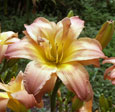
| Ambrosia Rows $20.00/df |
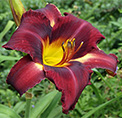
Bison Royalty $25/df |
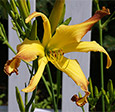
Cinnamon Crunch $20/df |
|
 |
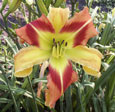 |
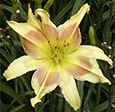 |
|
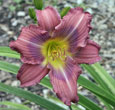
| Grape Kiss $20/df |
Love and Dazzle $25/df |
Merlot Splash not available |
|
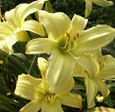 |
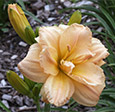 |
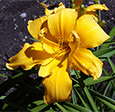 |
|
| Minnesota Sunshine $25.00/df |
Peach Flurry $20/df |
Solid Gold Spats 20.00/df |
Kathy’s Hybridizing Highlights
In 2018, we plan to have two new tetraploid introductions available! Photos and other details soon to follow.
My hybridizing interests continue to include unusual forms (UFs), spiders, eye patterns, and doubles. Hardy clear-colored pinks with good plant habit are another challenge I enjoy.
One of the reasons I enjoy daylilies is the incredible variety they offer to the gardener. I work with all sizes, from miniature to extra large, and I use diploids as well as tetraploids.
The overall theme here is hardiness in cold climates. Good branching and bud count, as well as healthy foliage, are other primary goals.
Northern breeders are making good progress in rebloom, especially in what is called instant rebloom, meaning that new scapes emerge while the initial scapes are nearing the end of their cycle. While we cannot rely on rebloom for most daylilies, 'Grape Kiss' has instant rebloom and so does ‘Ambrosia Rows’. Our 2015 introduction 'Mango Punch' is also a strong rebloomer.
Doubles are another challenge for northern breeders. In some cultivars, the doubling trait is seen mostly or only on rebloom, but with limited rebloom in our climate, we need doubling to occur on initial scapes. I work with both diploid and tetraploid doubles. To date, my double introductions include ‘Ambrosia Rows’, ‘Peach Flurry’, and ‘Solid Gold Spats’—all diploids. (For a tet double, watch for a 2018 announcement!) Note that strong fragrance is a bonus with ‘Peach Flurry’!
In the end, if a seedling meets my overall goals for hardiness and performance—and it's pretty—I'll keep it!
Please get in touch if you have any questions or comments!
All the best,
Kathy
P.S. To learn about daylily forms, see More About Daylilies.